Launching Carbon Offsetting Rice Emissions Project with GIZ <span class="txt-orange">to Reduce Rice Farming Emissions in Nigeria</span>
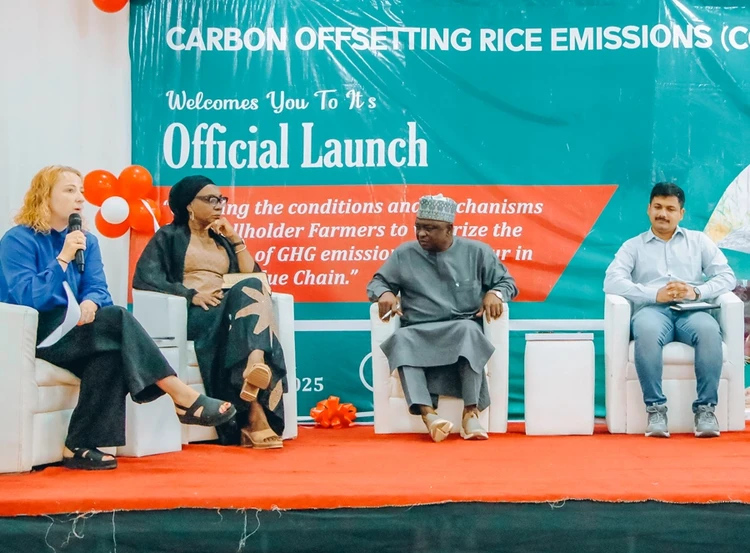
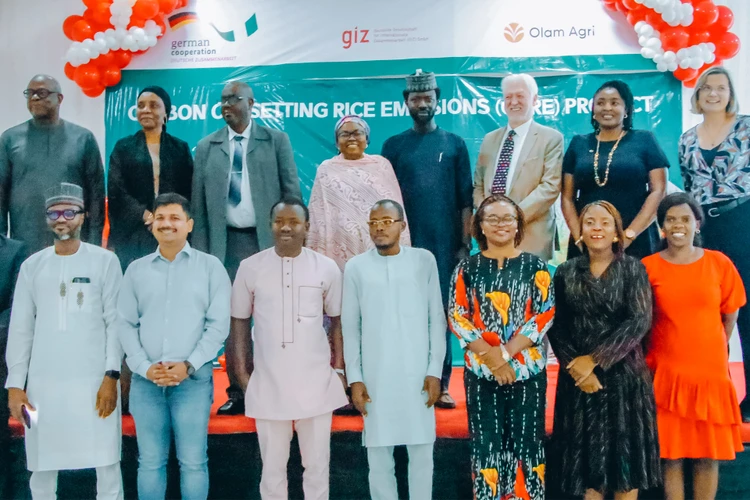
<span class="p2">Abuja, Nigeria – Olam Agri, in partnership with Deutsche Gesellschaft für Internationale Zusammenarbeit (GIZ) GmbH, has launched the Carbon Offsetting Rice Emissions (CORE) project in Nigeria. The project is supported by the Fund for the Promotion of Innovation in Agriculture (i4Ag) and commissioned by Germany’s Federal Ministry for Economic Cooperation and Development (BMZ). A Memorandum of Understanding (MoU) signed in Abuja on August 18, marked this significant milestone in Nigeria’s journey toward climate-smart agriculture.</span>
<span class="p2">Operating across Benue, Nasarawa, and Kano States, CORE will run until June 2027. Its primary objective is to promote scalable, climate-friendly farming methods that reduce greenhouse gas emissions while increasing yields and reducing production costs, tackling climate change and food security in tandem. The project will also develop internationally recognised carbon certification methodologies, paving the way for farmers to earn carbon credits in return for climate-friendly practices.</span>

<span class="p2">CORE’s implementation directly aligns with Nigeria’s national and sectoral priorities, supporting the country’s agricultural transformation agenda, its Nationally Determined Contributions (NDCs), and the Sustainable Development Goals (SDGs) By bringing together stakeholders from government, the private sector, institutions, and civil society, the project strengthens collaboration to drive climate-smart farming at scale.</span>
<span class="p2">Through innovative methods such as alternate wetting and drying , a water-saving technique that reduces methane emissions, biochar production, a process that converts agricultural waste into a soil amendment, Azolla integration, a practice that uses a nitrogen-fixing water fern to reduce the need for chemical fertilisers, and improved post-harvest practices, CORE aims to reduce emissions, enhance water efficiency, improve soil health, and minimise post-harvest losses.</span>
<span class="p2">The CORE Project’s Impact Goals Include:</span>
<ul><li><span class="p2">60,000 tons of CO₂-equivalent emissions reduced</span></li><li><span class="p2">12,000 smallholder farmers trained in low-emission farming practices</span></li><li><span class="p2">3,000 women farmers empowered as leaders and entrepreneurs</span></li><li><span class="p2">One internationally submitted carbon accreditation methodology (PDD)</span></li><li><span class="p2">Two strategic MoUs signed to scale project outcomes</span></li></ul>