Bridging the Gap for <span class="txt-orange">Gender Equity in Agriculture</span>
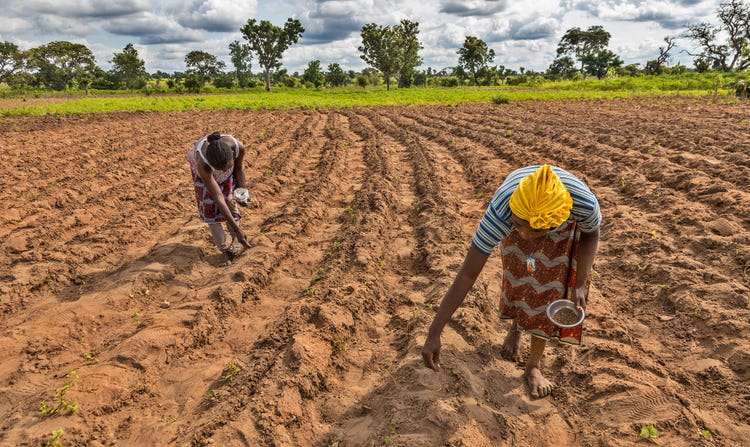
<br><span class="p1">Women are an agricultural force in the Global South. In parts of Africa and Asia, women account for 60%<sup>1</sup> of agricultural labour.</span>
<span class="p1">Despite their importance, systemic barriers such as access to land, inputs, financial services and education tend to hold women back from economic success. With responsibilities that extend beyond the fields and include household duties, the average woman farmer clocks 12 to 13<sup>2</sup> more hours per week compared to their male counterparts.</span>
<br>
<span class="p1">Addressing social inequalities in the farms and communities that we work in is fundamental to sustainable growth. When women have equal access to agricultural resources, they can potentially increase their yields by 20-30% and produce sufficient food to feed 100-150 million<sup>3</sup> hungry people worldwide. At Olam Agri, we’ve committed to reducing social inequities for 200,000 women, youth, and marginalised groups across our global value chains by 2030.</span>
<span class="p1">From Africa to Asia, we’ve implemented a range of initiatives spanning no less than six countries. These initiatives aim to help women in farming communities overcome systemic barriers, ensuring equitable distribution of rural prosperity for all.</span>
<h5><b>Mobilising women rice farmer communities in India</b></h5>
<span class="p1"><i>Krishi Sakhis</i>, also known as “women farmers’ friends”, are communities of female rice farmers that we’ve helped support and train since 2020. As part of our Sustainable Rice project conducted with the International Finance Corporation (IFC) and the Government of India’s National Rural Livelihood Mission, we address challenges that women farmers face such as gender disparity, low quality yields and limited market access. The <i>Krishi Sakhis</i> have received valuable training and education, and in turn, helped mobilise more farmers within their communities. More than 1,000 women farmers have benefitted from this programme to-date.</span>
<h5><b>Empowering women with financial self-sufficiency in Chad</b></h5>
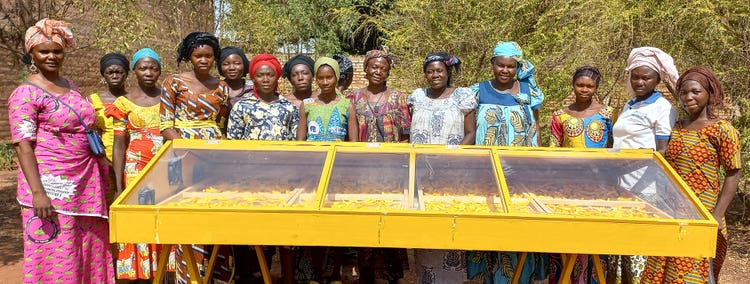
<br><span class="p1">For women farmers in Chad, the first step to empowerment is recognising their value and the essential role they have in their communities. To do so, we partnered The Sustainable Trade Initiative (IDH) to establish women farmer co-operatives, enabling more women to build livelihoods through cotton farming as a means to accessing to land and input.</span>
<span class="p1">Through these farmer co-operatives, over 500 women have received training on crucial gender-related issues such as human rights, gender-based violence and gender mainstreaming. Additionally, our Mango Drier Project has empowered 700 women with the skills to be financially self-sufficient by providing a new source of income while contributing to food security for over 3,500 people in local communities. </span>
<br>
<h5><br><b>Improving income security for women in West Africa</b></h5>
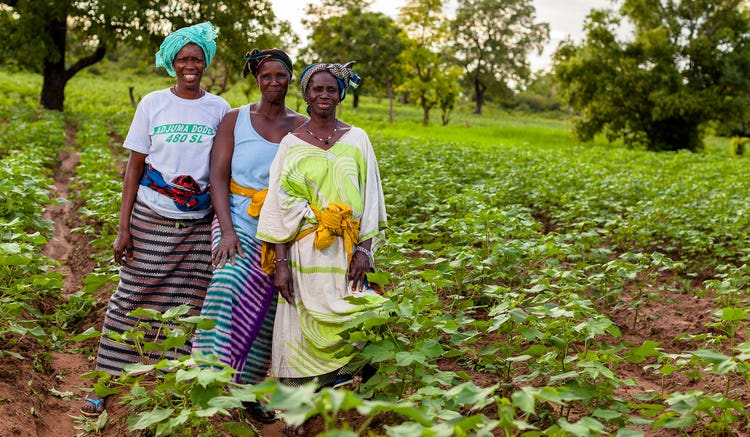
<span class="p1">Rural women are most vulnerable to poverty<sup>4</sup>. Enhancing their productivity and incomes is crucial to improving their food security and well-being. Since 2018, our Village Savings and Loans Associations (VSLA) have helped more than 7,000 women in West Africa access adult literacy training classes, and supported farmers with resources when harvest yields are poor.</span>
<span class="p1">In Côte d’Ivoire, the VSLA programme has established more than 175 groups within our cotton-growing communities, and helped women farmers diversify their livelihoods through income-generating activities such as the sale of local dishes, agricultural products, condiments and clothes at local markets.</span>
<br><h5><b>Challenging gender stereotypes in Congo</b></h5>
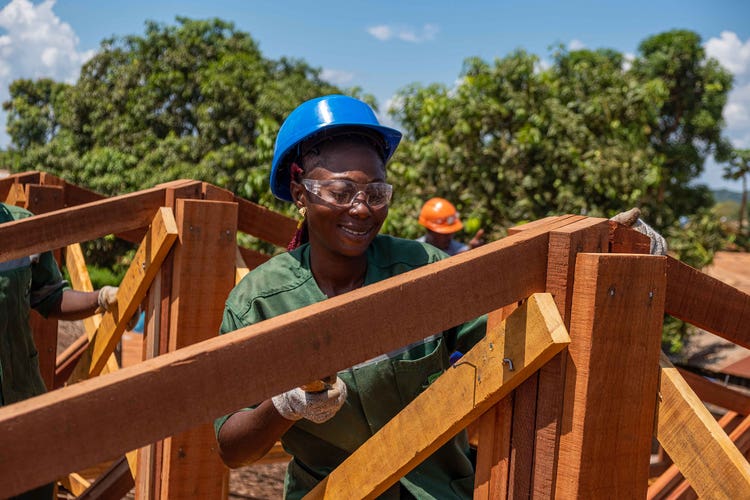
<span class="p1"><br>To improve the economic prospects of rural women in Congo, our sustainable timber business in the Republic of Congo established the “Home Maker to Home Builder” initiative. This project has been instrumental in imparting valuable wood trade skills to 50 women who, up till their participation in the project, were home makers who had never imagined that they could enter the male-dominated wood working and construction industry. To date, over 40 women have been trained, and moved on to become part of the Olam Agri workforce. The project has now been expanded to include all young adults in Congo, equipping them with skills for formal jobs.</span>
<h5><b>Reducing household labour for women in Nigeria and West Africa</b></h5>
<span class="p1">In rural communities, women and girls often spend countless hours collecting firewood for cooking. This increases their household burden and limits their productivity. They frequently rely on inefficient and unhealthy three-stone stoves, which also contribute to carbon emissions.</span>
<span class="p1">In Nigeria and West Africa, we’ve launched community initiatives to support farming households with clean-burning cookstoves which reduce respiratory illnesses and prevent the destruction of forests. We aim to install more than 8,000 cookstoves across 4,000 households to reduce the time women spend collecting firewood and improve their health.</span>
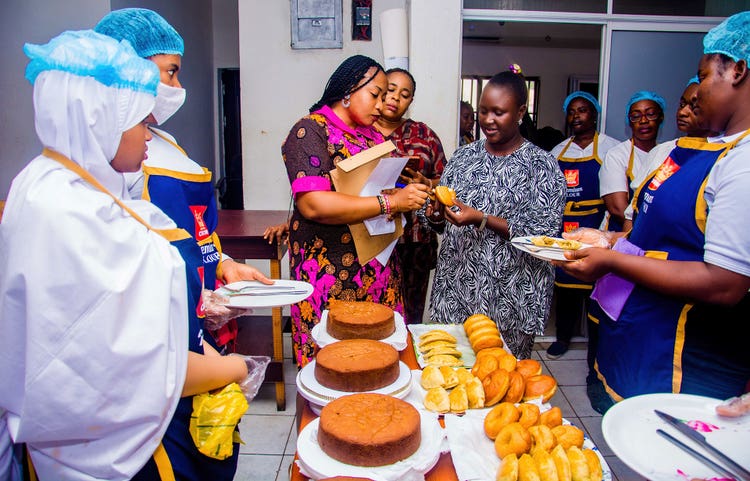
<h5><b>Uplifting economic prospects for women in Nigeria</b></h5>
<span class="p1">To find out more about how we’re improving the livelihoods of rural communities.</span>
<span class="p1"><sup><br>1</sup> <a href="https://news.un.org/en/story/2016/12/547942" target="_blank" rel="noopener noreferrer">UN 2016</a></span>
<span class="p1"><sup>2</sup> <a href="https://www.ifad.org/documents/38714170/40706239/gender-familyfarming_asia.pdf/a9920759-2f8b-4eef-bf26-30e78e604b5e" target="_blank" rel="noopener noreferrer">IFAD “The changing role of women in the economic transformation of family farming in Asia and the Pacific” (2014</a>)</span>
<span class="p1"><sup>3</sup> <a href="https://news.un.org/en/story/2011/03/368252" target="_blank" rel="noopener noreferrer">UN 2011</a></span>
<span class="p1"><sup>4</sup> <span class="p1">IFAD (International Fund for Agricultural Development) (2020). Nigeria. The context.</span></span>