Building a Business that <span class="txt-orange">Conserves Forests, One Step At a Time</span>
<span class="p1"><i><br>
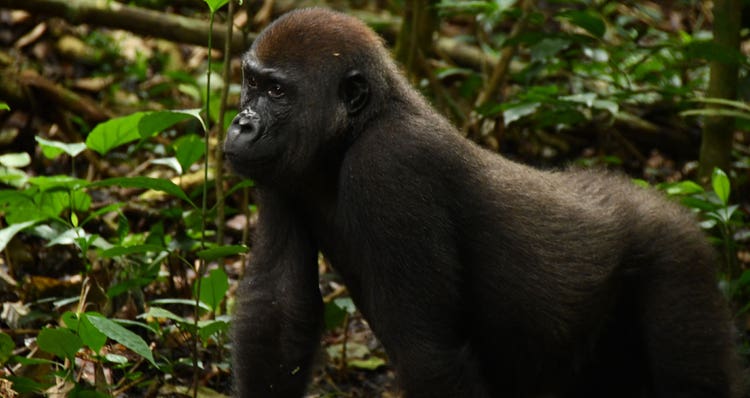
“This landscape is ideal for wildlife viewing compared to other natural forests in the area. The forest is more open, making it easier to see and spot gorillas and other wildlife. This feature has made sites such as Mondika one of the world’s most interesting spots for the study of great apes.</i></span>
<span class="p1"><i>It may surprise some to hear that critical gorilla and chimpanzee habitats around the buffer zones of Nouabale-Ndoki National Park, are also where sustainable timber harvesting is practiced.”</i></span>
<span class="p1">Forests are fundamental to our livelihoods, provide a critical barrier against climate change and are a vital natural resource. We sustainably and responsibly manage natural forest concessions covering over 2.1 million hectares in the Republic of the Congo. Our concessions are a source for 100% Forest Stewardship Council®* (FSC®) certified timber, and our wood products make their way to Europe and the rest of the world as a sustainable building material.</span>
<span class="p1">Our experience in the forests of the Congo Basin is the result of decades of unwavering commitment to ensure that business, people, and nature can co-exist and thrive. Here is what we’ve been doing to make this possible.<br></span>
<span class="p1"><b>Pioneering sustainable forestry – with some help</b></span>
<span class="p1">The forests of Congo are home to rich biodiversity, the source of vital ecosystem services, a carbon sink – and a key source of livelihood for the thousands of people involved in our wood business.</span>
<span class="p1">Pioneering management measures across our concessions in Kabo, Pokola, Loundoungou-Toukoulaka and Mimbeli-Ibenga help ensure that we continue to protect the forests that we source from. These measures are developed in close consultation with all relevant.</span>
<span class="p1">Selective, low impact harvesting in our concessions helps preserve high-integrity forest areas and the biodiversity within them. We have a low harvest rate of less than one tree per hectare per year. We follow a rotation cycle of more than 25 years, meaning we go back to the selectively harvested area after more than 25 years.</span>
<span class="p1">Years of experience in the region have taught us the value of transparency and collaboration with NGO and research partners, which has contributed to the advancement of techniques for responsible harvesting, that now serve as models in other regions.</span>
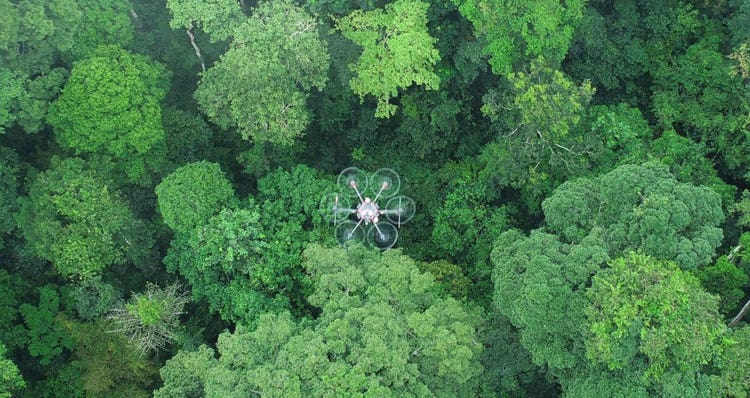
In a recent project, we worked with researchers from the University of Maryland (UMD) in the United States to collect drone-based optical and lidar data across our sites to monitor natural forest dynamic. © CIB </span>
<span class="p1"><i> </i><b><br>
To protect a forest, it takes a village</b></span>
<span class="p1">From over 20 years working together, our partners have taught us that collaboration is vital for conservation.</span>
<span class="p1">Our range of partnerships with the local authorities, non-governmental organisations (NGOs) and academic research groups have brought science, policy and business together with the shared goal to protect Nouabale-Ndoki National Park (NNNP) for the long term. Indeed, the protection of an area, even a very large one, can only be effective if measures are put in place to ensure the co-existence of responsible economic activities and protection in its periphery.</span>
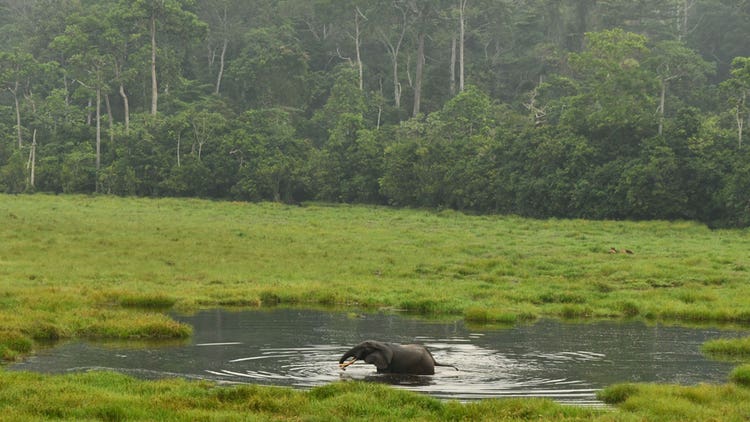
Nouabalé-Ndoki National Park is home to chimpanzees, elephants, and other primate species. © Vincent Istace </span>
<span class="p1"><i> <br>
To support scientific research, we work with various partners. Recently, we launched a new collaboration with <b>Nature+</b>, a non-profit organisation focused on sustainable management of African forest ecosystems, and <b>Le Groupe Millet</b>, a customer wishing to ensure the responsible origin of its supplies. This partnership develops research and awareness-raising on the dynamics of natural forest ecosystems.</i></span>
<span class="p1">For the past 20 years, an <a href="https://www.olamgroup.com/news/all-news/press-release/partnership-agreed-with-the-wildlife-conservation-society-and-the-republic-of-congo.html" target="_blank" rel="noopener noreferrer">innovative tripartite agreement</a> with the <b>Wildlife Conservation Society</b> (WCS) and the <b>Congolese government</b> has allowed communities, biodiversity – and business – to thrive side by side. This partnership has since provided ongoing support for the establishment of anti-poaching units. These ecoguards work tirelessly under the supervision of the state and in collaboration with local populations, patrolling several tens of thousands of kilometres per year to protect wildlife and local biodiversity. They removed more than 4,500 metal traps in our concessions in 2022 and released 86 animals seized alive.</span>
<span class="p1">The partnership has also helped identify and expand important forest areas for protection. In March 2023, we shared the expansion of the national park with the incorporation of the Djéké Triangle – a 9,500-hectare, ecologically important forest. Read more about the Djéké Triangle <a href="https://www.olamgroup.com/news/all-news/press-release/djeke-triangle-incorporated-into-nouabale-ndoki-national-park-in-northern-congo.html" target="_blank" rel="noopener noreferrer">here</a>. </span>
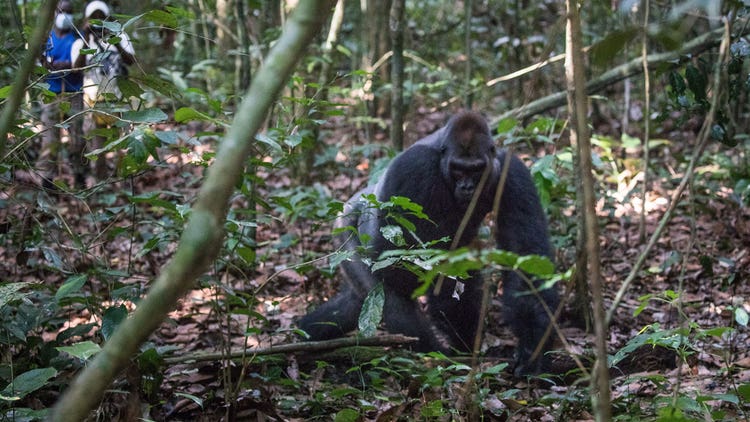
Kingo is estimated to be nearly 45 years old, with the vast majority of those years spent in contact with humans. He was the first silverback accustomed to human presence in Mondika and has become a legend. © S. Ramsay/WCS.</span >
</i><b>Going further with corporate responsibility</b></span>
<span class="p1">We have taken extra measures to reduce our environmental impact by exploring innovative and best-in-class wood processing technologies to minimise waste. Wood in various dimensions is used to make semi-finished and finished products, while improving local skills and production capabilities.</span>
<span class="p1">We also invest in technology to valorise wood waste for energy. Since 2014, the energy derived from wood waste has powered our factories, offices, and employee housing. Today, employees residing in 850 houses in Pokola enjoy free access to electricity.</span>
<span class="p1"><b><br>
Supporting local communities and livelihoods</b></span>
<span class="p1">Local communities are vital to help us create a resilient business that lasts. By contributing to jobs creation and training, we ensure that our success is shared by the communities that we work with.</span>
<span class="p1">We’ve created and improved roads in support of the local government and partners. These roads have become a vital connector providing forest-dwelling local communities with access to new livelihoods and a better quality of life without resorting to poaching wildlife for the illegal trade.</span>
<span class="p1">
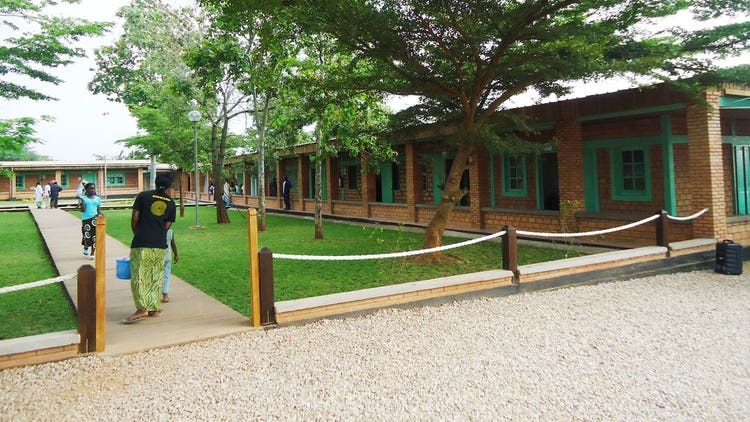
Today, we support the health and well-being of over 60,000 people, including 25,000 indigenous people in our concessions. By creating value for the whole population, we are considering the full range of our impacts and anchoring our activities in the future.</span><br>
<span class="p1">We adopt a net positive approach and aim to put back more into food and farming systems than we take out. Find out more in our <a href="https://www.olamgroup.com/sustainability/governance/policies-and-positions/living-landscapes-policy.html" target="_blank" rel="noopener noreferrer">Living Landscapes Policy</a>, which outlines our commitment to the creation and restoration of natural and social capital in Congo and places where we operate.</span>
<i>*FSC Certification Numbers: SGS-FM/COC-004705 / SGS-FM/COC-010641 / SGS-FM/COC-008483 / SGS-FM/COC-011928 / SGSCH-COC-002697 / SGSCH-PRO-600038.</i>